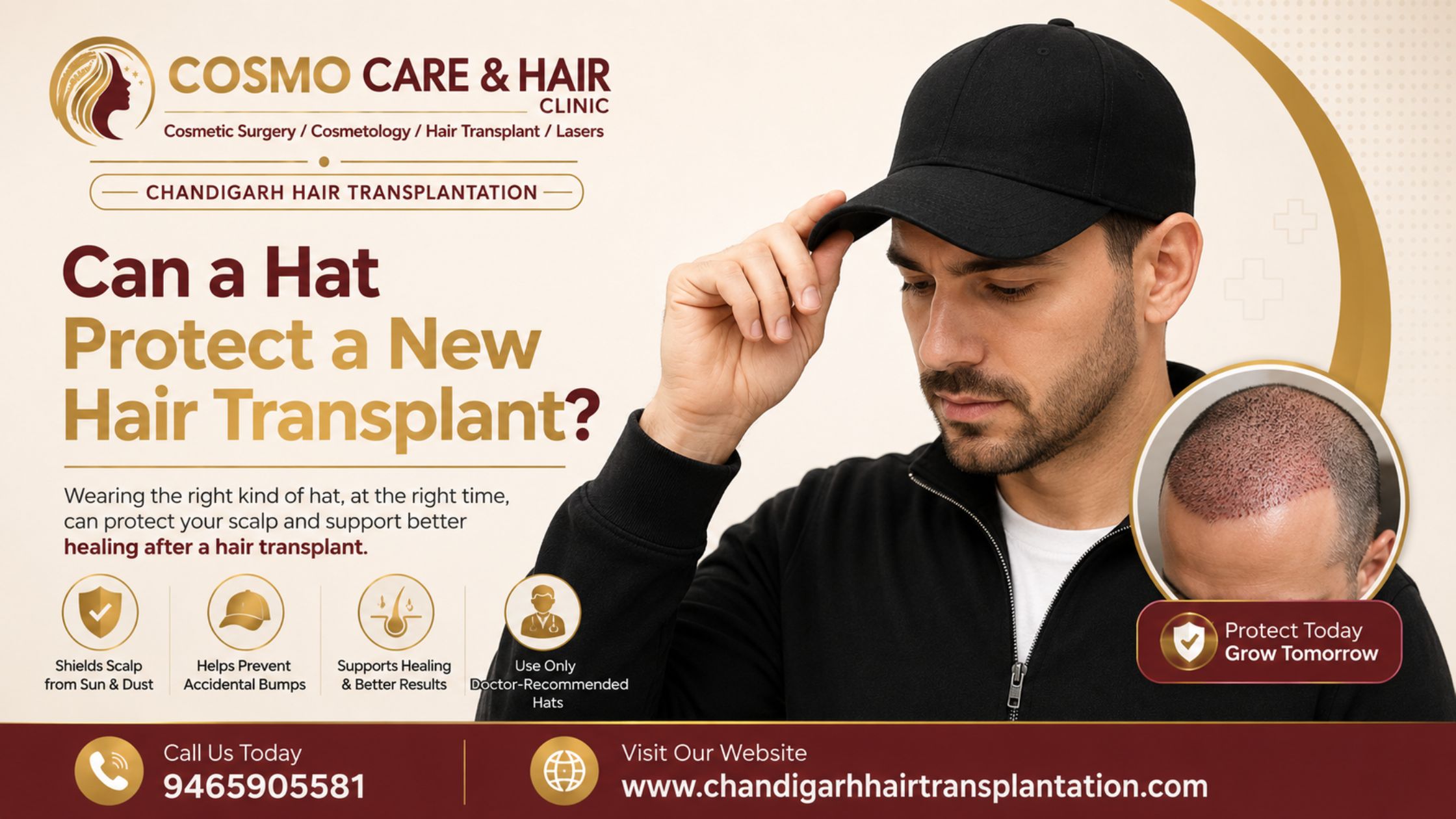
Many people wonder if wearing a hat after a hair transplant is safe. The answer is yes, but timing and the type of hat matter. Newly transplanted hair grafts need time to settle into the scalp, and any unnecessary pressure can affect the healing process. Wearing a hat correctly during recovery can protect the transplanted area and contribute to healthier hair development.
Why New Hair Grafts Need Care?
During a hair transplant, individual hair follicles are implanted into tiny openings in the scalp. For the first few days, these grafts are delicate and can be disturbed by friction, pressure, or accidental contact.
It is normal to experience mild redness, swelling, and sensitivity during the early healing period. Proper aftercare helps the grafts remain secure and increases the chances of successful hair growth.
The Impact of Sunlight on a Healing Scalp
Direct sunlight can be harsh on a recently treated scalp. Since the skin is more sensitive after surgery, prolonged exposure to UV rays may increase irritation and discomfort. Excessive sun exposure can also slow the recovery process.
A hat can provide protection from sunlight once your surgeon confirms it is safe to wear one. Limiting sun exposure during the first few weeks is an important part of post-transplant care.
When Can You Start Wearing a Hat?
The right time to wear a hat varies from person to person. Most surgeons recommend avoiding hats immediately after the procedure because the grafts need time to stabilize.
After the initial healing period, a loose and comfortable hat may be permitted. It should sit gently on the scalp without rubbing or pressing against the transplanted area. Always follow your surgeon’s instructions for the safest recovery.
Selecting the Right Hat
Not every hat is suitable after a hair transplant. The ideal choice is lightweight, breathable, and loose-fitting. Soft fabrics help reduce irritation and allow better airflow around the scalp.
Many patients find that bucket hats or specially recommended recovery hats provide good protection without putting pressure on the healing area. Tight caps and heavy headwear should be avoided until recovery is more advanced.
Common Headwear Mistakes to Avoid
Some patients accidentally interfere with healing by wearing hats incorrectly. Common mistakes include:
- Wearing a hat too soon after surgery.
- Choosing a tight-fitting cap.
- Frequently putting on and removing the hat.
- Using unclean headwear that may introduce dirt or bacteria.
Avoiding these mistakes can help create a healthier environment for the grafts to heal properly.
Benefits of Wearing a Hat During Recovery
Once approved by your surgeon, wearing a hat can offer several advantages. It can shield the scalp from sunlight, dust, wind, and accidental contact while outdoors.
Many patients also appreciate the added confidence a hat provides during the healing phase, especially when redness or small scabs are still visible.
Weather Conditions and Scalp Protection
Environmental conditions can affect recovery after a hair transplant. Hot weather may increase sweating and sun exposure, while windy conditions can expose the scalp to dust and debris. Cold temperatures may sometimes lead to dryness and discomfort.
A suitable hat can provide an extra layer of protection against these factors, but it should never replace other aftercare recommendations.
Good Aftercare Supports Better Hair Growth
The success of a hair transplant depends on more than the procedure itself. Following proper aftercare instructions, protecting the scalp, and avoiding anything that could disturb the grafts all contribute to better long-term results.
At Chandigarh Hair Transplantation, patients receive detailed recovery guidance to help ensure a smooth healing process and support natural-looking hair growth.
Frequently Asked Questions
1. Can I wear a hat right after a hair transplant?
Most surgeons recommend waiting a few days before wearing any headwear to avoid disturbing the newly implanted grafts.
2. Which hat is safest after a hair transplant?
A loose, lightweight, and breathable hat is generally the best option once approved by your surgeon.
3. Can a tight cap harm transplanted hair?
Yes. Tight hats can create pressure on the grafts and may affect the healing process.
4. How long should I avoid direct sunlight?
Most patients are advised to protect their scalp from direct sun exposure for several weeks after the procedure.
5. Do I need to wear a hat during recovery?
Not necessarily, but a properly fitted hat can help protect the scalp from sunlight, dust, and environmental exposure when worn at the appropriate stage of healing.