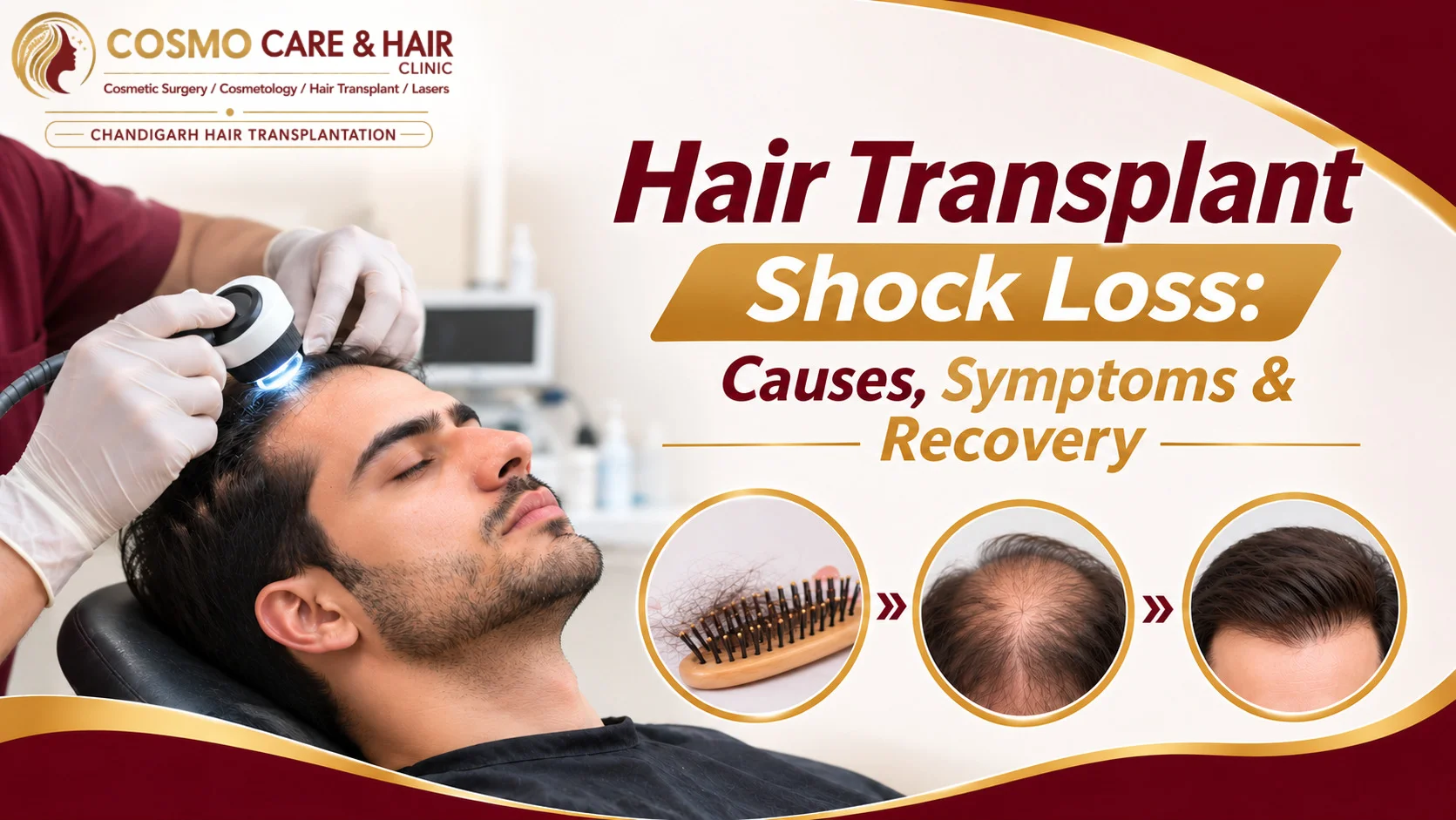
You look in the mirror two weeks after your hair transplant and panic. The hair around the new grafts looks thinner than before. Is the surgery failing? Not at all. This is shock loss after hair transplant, and many patients go through it.
The good news is that this hair loss is usually temporary. The follicles are only resting, and most hair grows back in a few months. Still, the waiting period can feel long and stressful. In this blog, you will learn why it happens, what it looks like, and how to recover safely. We also share a timeline.
What Is Hair Transplant Shock Loss?
Shock loss is the temporary shedding of hair after a transplant. The surgery stresses the scalp, so some hairs stop growing for a while and fall out. Two things get mixed up:
- Native hair: Your existing hairs near the transplanted area can thin out. Doctors call this shock loss after hair transplant.
- Transplanted hair: The new grafts shed their hairs within a few weeks. This is a normal part of the growth cycle.
In both cases, the follicle stays alive.
What Causes Shock Loss After Hair Transplant?
There is no single reason behind shock loss after hair transplant. It mostly comes from stress to the scalp. Here are the five main causes.
- Surgical trauma: Making tiny cuts for thousands of grafts irritates the skin. Hairs near those cuts can go into a resting phase and fall out. Gentle techniques like Bio FUE hair transplant can help keep this stress low, but some shedding can still happen. It is the body’s reaction to the procedure, not a mistake by the surgeon.
- Reduced blood supply: The cuts and swelling can cut down blood flow to nearby follicles for a short time. Follicles that get less nourishment stop producing hair until circulation returns to normal.
- Local anesthesia: The numbing injections often contain a medicine that tightens blood vessels for a short time. This adds to the stress on nearby follicles, especially thin and weak ones.
- Weak existing hair: Hair that was already thin or weakened is more sensitive. It cannot handle the stress of surgery well, so it sheds first. This is why shock loss is more common in areas with early hair loss.
- Dense graft placement: When many grafts go into a small area, the skin gets crowded and swollen. This pressure can affect nearby hairs and slightly raise the chance of shedding. Not sure how many grafts you need? Try our graft calculator.
What Are the Symptoms of Shock Loss After Hair Transplant?
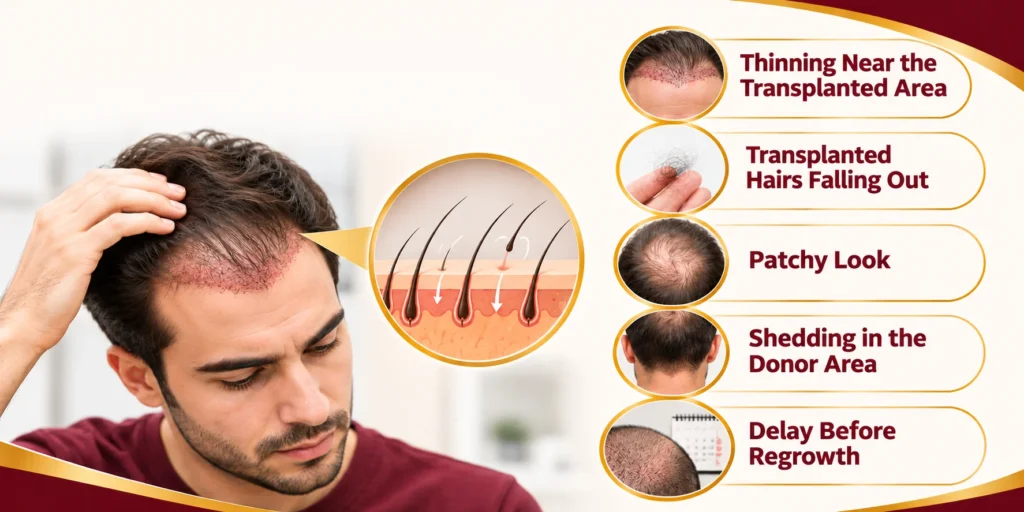
Most people notice shock loss after hair transplant within the first few weeks. These are the five main signs you may notice along the way.
- Thinning near the transplanted area: Your existing hair in or around the recipient area looks lighter. The part may look wider, and the area may seem less full than before the surgery.
- Transplanted hairs falling out: Between week 2 and week 8, the hair shafts fall off while the follicles stay safe under the skin. It looks scary, but it is a normal step before regrowth starts.
- Patchy look: Hair may shed unevenly, so you can see small bald spots or a see-through look in some areas. Other areas may look almost unchanged. This unevenness settles as hair regrows.
- Shedding in the donor area: In rare cases, hair at the back or sides of the head thins out too. It is not common, and in most cases this hair grows back on its own with time.
- Delay before regrowth: After the shedding, there is a quiet gap of a couple of months with no visible growth. This waiting phase worries many people, but the follicles are resting, not dead.
Is Shock Loss After a Hair Transplant Permanent?
In most cases, shock loss after hair transplant is not permanent. The follicles are stunned, not destroyed.
- Hair usually starts regrowing within 3 to 6 months.
- Rarely, some weak native hairs that were already thinning may not return.
- Transplanted hair stays permanent.
Shock Loss After Hair Transplant Recovery Timeline
The timeline of shock loss after hair transplant looks different for everyone, but most people follow a similar pattern. Here is what usually happens next.
Week 1–2: Initial Healing
The first two weeks are about healing. Your scalp stays red and swollen, and small scabs form around each graft. Most of the swelling goes down in the first week.
- Scabs usually fall off by day 10 to 14.
- Mild itching is common.
- Do not scratch or pick at the grafts.
- Follow your surgeon’s washing instructions carefully.
- Sleep with your head raised to reduce swelling.
The grafts are still settling in, so avoid heavy exercise and sun on your scalp.
Week 2–8: Shock Loss Phase
This is the phase most people worry about. Between week 2 and week 8, the transplanted hairs fall out, and some of your existing hair may thin out too. The area can look thinner than it did before surgery.
- Shedding peaks around weeks 3 to 6.
- Tiny hair shafts and scabs may come off during washing.
- Your follicles stay alive under the skin.
Stay calm, keep washing gently, and do not use any hair product without first asking your doctor.
Month 2–3: Resting Phase
By now most of the shedding has stopped, and the scalp looks quiet. This is the resting phase, and nothing much seems to happen. Behind the scenes, the follicles are getting ready to grow new hair.
- The area may look thin or patchy.
- You may see a few fine, short hairs.
- Redness is mostly gone.
- Itching and tightness have mostly settled too.
This is the hardest stretch mentally, so avoid comparing your scalp with photos online. Patience pays off here.
Month 3–4: Early Hair Regrowth
Around the third or fourth month, new hair finally starts to show. At first the hairs are thin, soft, and may look uneven. Do not expect thick hair yet.
- Fine hairs appear in the transplanted area.
- Growth looks patchy at first, which is normal.
- Your existing hair also starts to come back.
- Take photos once a month in the same light to track progress.
Keep taking any medicines your doctor gave you, such as minoxidil or finasteride, only as advised.
Month 4–6: Visible Hair Growth
Between months 4 and 6, growth becomes easier to see. Hairs get longer and thicker, and the thin areas begin to fill in. Many people feel a big boost in confidence at this point.
- Hair grows about half an inch a month.
- Texture slowly changes from fine to normal.
- Light styling becomes possible.
- The scalp can still feel slightly sensitive.
Results still look incomplete, so keep your expectations realistic. Do not judge your result yet; the best part is still ahead.
Want to see real patient results? Browse our before and after gallery.
Month 6–12: Continued Hair Development
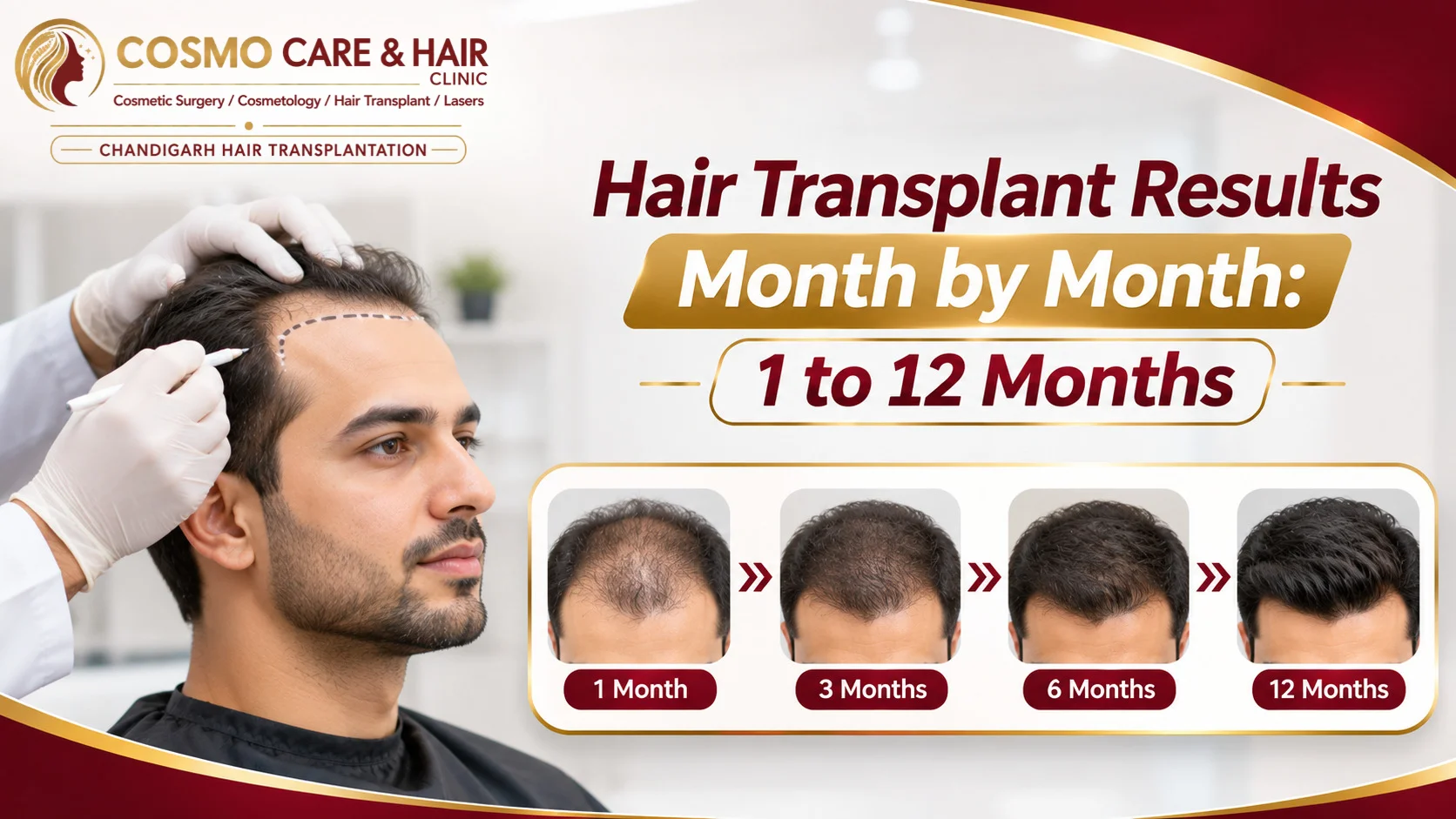
From month 6 to month 12, hair keeps getting denser and stronger. Most people see their final result close to the 12-month mark. Want a full month-wise guide? Read our hair transplant results month by month. Some need up to 18 months for full density.
- Hair becomes thicker and more natural.
- The hairline looks well blended.
- Texture and shine improve with time.
- Eat well and keep up gentle hair care.
If you still see thin spots after a year, book a check-up with your surgeon to understand why and plan the next step.
How to Recover from Hair Transplant Shock Loss

Hair growth cannot be rushed, but these simple habits help you recover from shock loss after hair transplant more smoothly.
- Follow your surgeon’s aftercare plan: Wash, medicate, and sleep exactly as told. Small shortcuts can slow down healing.
- Handle your scalp gently: Do not scratch, rub, or pick at scabs. Pat your scalp dry with a soft towel.
- Avoid sun and heat: Cover your head with a loose cap outdoors, and stay away from saunas and steam rooms for the first few weeks.
- Eat well: Include protein, iron, zinc, and vitamins in your meals. Hair needs good food to grow.
- Sleep well and manage stress: Poor sleep and heavy stress can delay hair growth, so give your body proper rest.
- Avoid smoking and limit alcohol: Both reduce blood flow to the scalp and can slow down healing.
- Keep your follow-up visits: Regular check-ups let your doctor track your growth and fix any problem early.
Recovery takes time, but most people see good results. Stay patient and talk to your surgeon whenever something worries you.
When Should You Consult a Hair Transplant Surgeon?
Shedding is normal, but some signs need a check-up. Call your surgeon if you notice:
- Pus, strong pain, or fever
- Redness or swelling that keeps growing
- No new growth after 12 months
- Concerns about shock loss after hair transplant that last longer than expected
Worried about your results? Book a free consultation with Dr. Rahul Goyal at Chandigarh Hair Transplantation.
Conclusion
Shock loss after hair transplant can feel scary, but it is a normal and temporary part of healing. Your follicles are not gone. They are resting, and new hair starts growing back after 3 to 4 months for most people.
Follow your aftercare plan, stay patient, and keep realistic expectations. Final results take 9 to 12 months, and sometimes longer. If something worries you, talk to an experienced surgeon early. A calm mind and a good doctor make this wait much easier. Good things take time, and hair is no different.