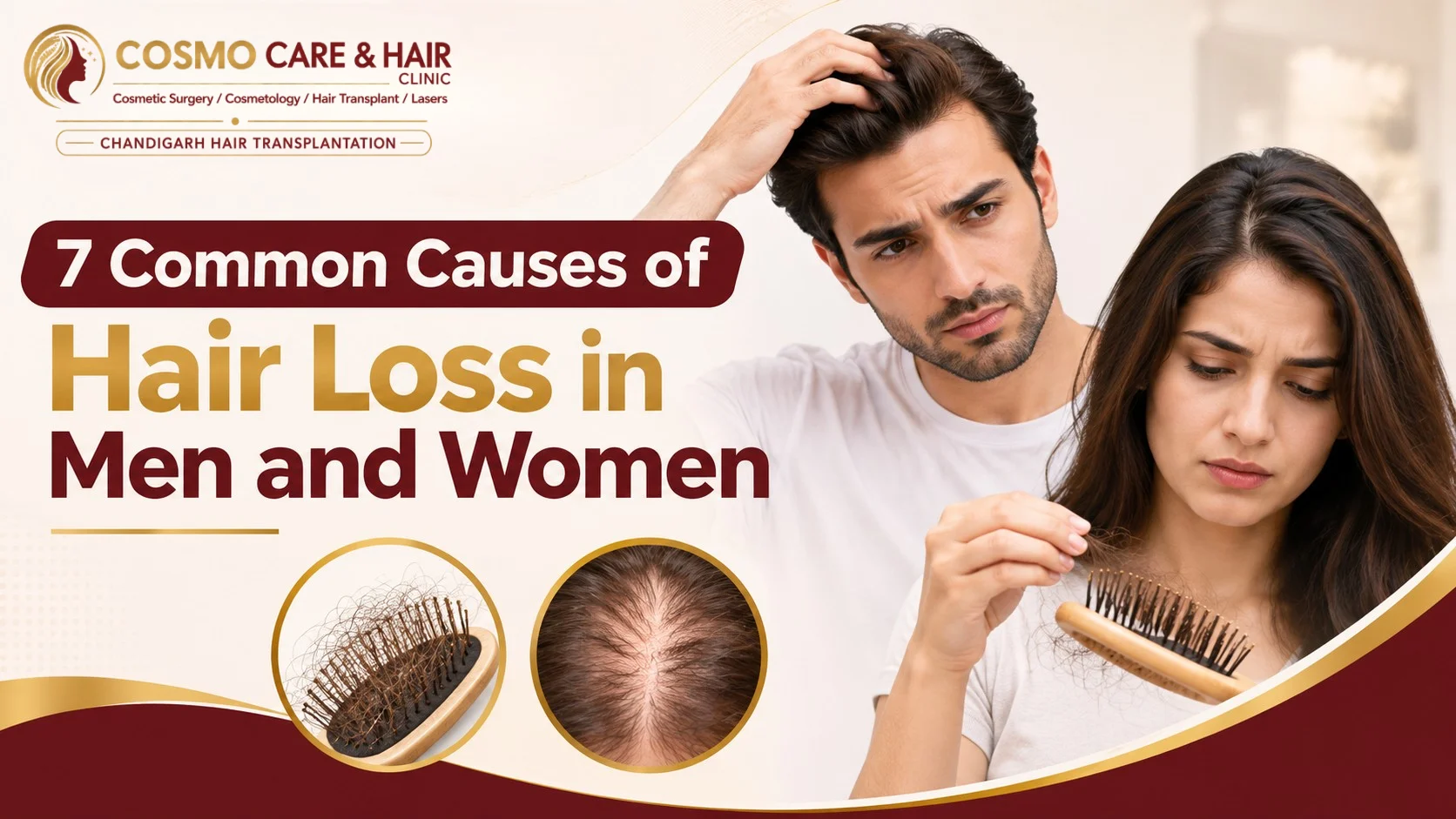
Noticing more hair in your shower drain? Perhaps your hairline looks different, or your scalp shows through when you part your hair. Hair loss can be frustrating, especially when you don’t know what’s causing it. Sometimes, the reason is genetic. Other times, stress, hormones, poor nutrition, or an underlying health problem may be involved.
However, hair loss doesn’t look the same in everyone. Men often notice a receding hairline, while women may see gradual thinning. This guide explains the common causes of hair loss in men and women, the warning signs to recognise, and when to seek medical advice.
1. Genetics and Hereditary Hair Loss
Does baldness run in your family? If so, genetics could explain your thinning hair. Hereditary hair loss, also called androgenetic alopecia, is the most common cause of gradual hair loss. In men, hair follicles can become more sensitive to a hormone called DHT. Over time, affected follicles produce thinner, shorter hair.
Women can develop hereditary hair loss too, although the pattern often looks different. This type usually develops slowly. Without suitable treatment, thinning can continue over time.
2. Hormonal Changes and Imbalances
Hormones play an important role in the hair growth cycle. When their levels change, hair growth can also change. For women, common triggers include:
- Pregnancy and childbirth: Hormone changes after delivery can cause temporary shedding.
- Menopause: Hormonal changes can contribute to gradual thinning.
- PCOS: Higher androgen levels can lead to scalp hair loss.
Thyroid problems can affect both men and women. An overactive or underactive thyroid may cause hair to become thinner across the scalp. However, hormonal hair loss isn’t always permanent. Treatment depends on the underlying problem.
3. Physical and Emotional Stress
Have you noticed increased hair fall a few months after a stressful event? Major illness, surgery, high fever, rapid weight loss, or severe emotional stress can trigger a condition called telogen effluvium. In simple terms, more hairs than usual enter the resting phase. They then shed several weeks or months later.
For example, someone recovering from a serious illness may notice increased shedding two or three months afterwards. The good news? This type of shedding often improves once the trigger has passed. However, prolonged hair loss deserves medical attention because another condition may be involved. Patients considering surgery should also understand how stress can affect a hair transplant, particularly during recovery and the overall hair growth process.
4. Nutritional Deficiencies and Poor Diet
Your hair needs enough nutrients to grow normally. When your diet lacks certain nutrients, hair growth can suffer. Common concerns include low iron, inadequate protein, and zinc deficiency. For instance, someone following a highly restrictive diet may notice increased shedding after rapid weight loss. However, not every person with hair fall has a vitamin deficiency.
Taking random supplements isn’t the solution either. Too much of certain nutrients can make hair loss worse. Instead, a doctor can recommend suitable tests when your symptoms or medical history suggest a deficiency.
5. Autoimmune Conditions and Scalp Diseases
Some forms of hair loss occur because of problems affecting the scalp or immune system. One example is alopecia areata, where the immune system attacks hair follicles. It often causes smooth, round bald patches. Scalp infections can also cause hair loss, sometimes with itching, redness, or scaling.
Another concern is scarring alopecia. In these conditions, inflammation can permanently damage hair follicles. That’s why painful, inflamed, or rapidly changing bald patches shouldn’t be ignored. Early treatment can help protect follicles that have not yet suffered permanent damage.
6. Medicines and Medical Treatments
Some medicines can affect the normal hair growth cycle. Hair loss may occur with certain drugs used for cancer, heart conditions, depression, or other illnesses. Chemotherapy is a well-known example because it affects rapidly growing cells, including those involved in hair production. However, the timing and amount of hair loss vary.
If you notice unusual shedding after starting a medicine, speak with the doctor who prescribed it. Don’t stop a prescribed medicine on your own. Your doctor can assess whether it may be contributing to the problem.
7. Tight Hairstyles, Heat and Chemical Damage
Not all hair loss begins with a medical condition. Repeatedly wearing tight ponytails, buns, braids, or extensions can pull on hair follicles. Over time, this may cause traction alopecia. The hairline and areas under the greatest tension often show the first signs. Meanwhile, frequent bleaching, straightening, and excessive heat can weaken hair strands.
This causes breakage, which can look like hair loss even when the follicle remains healthy. Looser hairstyles and gentler hair care can reduce further damage. However, long-term pulling can cause lasting loss.
What Are the Main Hair Loss Reasons in Men?
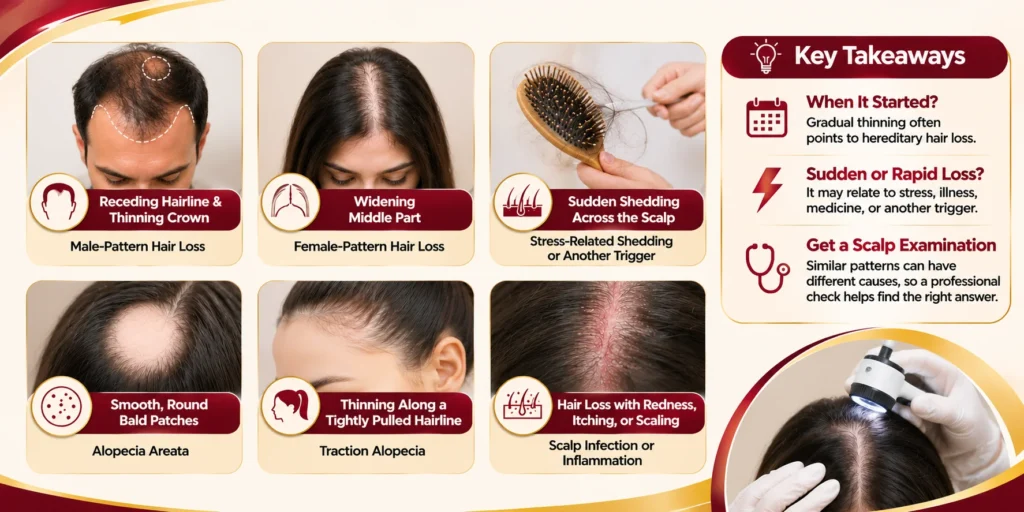
Hereditary male-pattern hair loss is one of the main hair loss reasons in men. It often starts with a receding hairline, thinning at the crown, or both. Over time, these areas may become more noticeable as hair strands grow finer. However, not every man with hair loss has male-pattern baldness.
Sudden shedding across the scalp could follow illness, stress, or a major change in diet. Round bald patches may point towards another condition. The pattern and timing matter. A hairline that slowly moves back over several years tells a different story from sudden shedding within a few weeks. That’s why identifying the cause should come before choosing any treatment.
What Are the Main Hair Loss Reasons in Women?
Hair loss reasons in women often include hereditary thinning, hormonal changes, stress, and nutritional problems. However, female-pattern hair loss commonly looks different from male-pattern baldness. Instead of a sharply receding hairline, women may notice:
- A wider middle part
- Less hair volume on top
- More visible scalp around the crown
Hair shedding after childbirth is another common concern. It usually improves with time as the normal growth cycle returns. PCOS, menopause, and thyroid disorders can also affect hair growth. If thinning occurs alongside irregular periods, unusual tiredness, or other symptoms, a medical assessment can help identify possible underlying causes.
What Does Your Hair Loss Pattern Tell You About Its Possible Cause?
Before trying another shampoo or hair growth product, look at how your hair loss has changed. The location, speed, and pattern can offer useful clues.
Here’s another useful question: Did the hair loss begin suddenly or develop over several years? Gradual thinning often suggests hereditary hair loss. Sudden shedding may relate to a recent illness, medicine, or stressful event. However, these patterns aren’t enough to confirm the cause. Two people can show similar signs but have different conditions. A scalp examination helps avoid guessing.
How Can You Find Out What Is Causing Your Hair Loss?
A hair loss specialist usually starts by examining your scalp and asking about your symptoms. They may want to know when the thinning began, whether baldness runs in your family, and if you’ve experienced a recent illness or major weight change.
Your medicines, diet, and hair care routine can also provide clues. Depending on the findings, the doctor may recommend blood tests for concerns such as thyroid disease or iron deficiency.
In some cases, a closer scalp examination or biopsy helps identify the problem. Not everyone needs every test. The aim is to find the cause before deciding what treatment, if any, is appropriate. Depending on the diagnosis, a dermatologist may recommend options such as minoxidil for hair growth for certain types of hair loss.
When Should You Consult a Hair Loss Specialist?
You should seek medical advice if hair loss is sudden, persistent, patchy, or accompanied by scalp symptoms. Don’t ignore these signs:
- Your hair is thinning steadily over several months.
- Bald patches appear unexpectedly.
- You notice pain, redness, or scaling on your scalp.
- Hair shedding increases sharply without a clear reason.
An early diagnosis is especially important for conditions that can damage hair follicles permanently. Also, remember that not every type of hair loss needs a hair transplant. Some causes improve with medical care, treatment of an underlying condition, or time. If surgery is eventually considered, factors such as hair loss progression and the right age for a hair transplant should also be evaluated by a qualified surgeon.