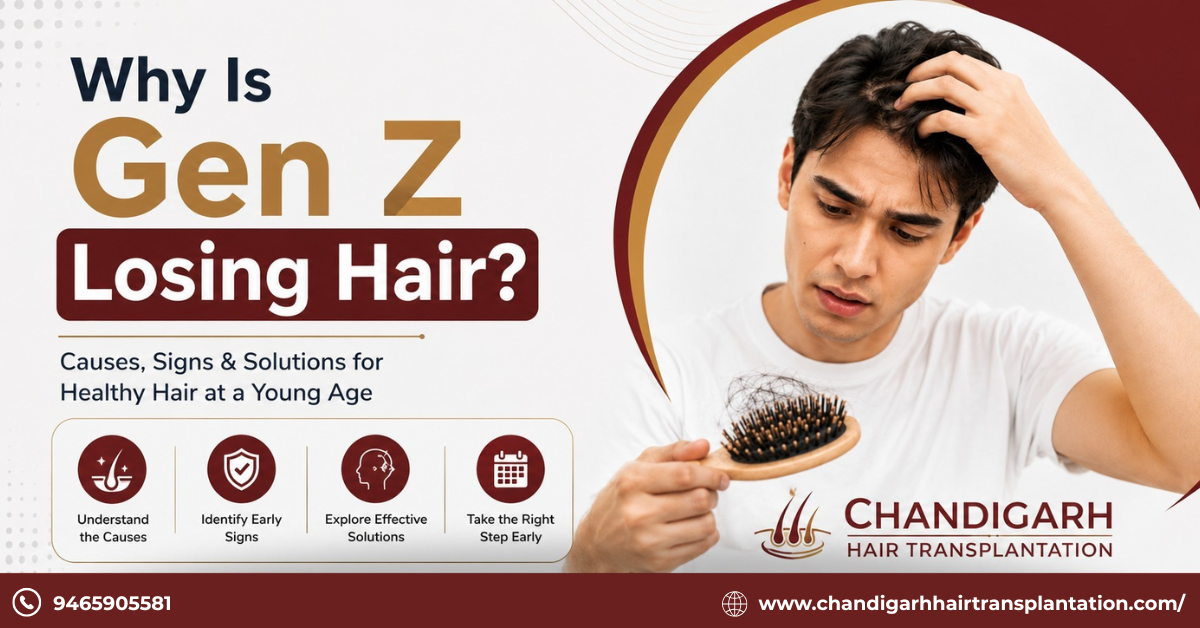
Hair loss is becoming a common concern among young people today, and Gen Z losing hair is now a topic many are talking about. People in their late teens and twenties are noticing more hair fall than ever before. Seeing extra hair on a pillow, in the shower, or on a comb can feel stressful. The good news is that hair loss at a young age often has clear reasons, and many of them can be managed with the right care.
Why Gen Z Losing Hair Is Becoming More Common Today?
Hair loss was once seen as something that happened later in life. But now many Gen Z adults are dealing with it earlier. There isn’t one single reason behind it. Hair health is connected to your lifestyle, stress levels, food habits, sleep, and even the environment around you.
Young adults today live differently than past generations. Long screen time, less sleep, processed food, pollution, and daily stress can all affect hair growth. Because of this, more people are seeing hair thinning, shedding, and weak hair at a younger age.
Stress and Anxiety Are Affecting Hair Health
Stress is one of the biggest reasons behind hair fall. Gen Z faces pressure from studies, careers, social media, and daily life. Constant stress can push hair into the shedding stage faster than normal.
This type of hair fall can happen a few months after a stressful event. Hair may feel thinner all over the scalp instead of in one area. Anxiety can also lead to poor sleep and unhealthy eating habits, which can make the issue worse.
Managing stress through rest, exercise, and regular breaks can help support healthy hair growth over time.
Poor Diet and Nutrient Deficiency Can Cause Hair Fall
What you eat has a direct effect on your hair. Hair needs protein, iron, zinc, vitamins, and healthy fats to grow strong. Many Gen Z adults skip meals, eat processed food often, or follow strict diets without enough nutrition.
When the body does not get enough nutrients, hair may become dry, weak, or start falling more than usual. Low iron, vitamin D deficiency, and low protein intake are common reasons for hair loss in younger adults.
A balanced diet with fruits, vegetables, eggs, nuts, seeds, and protein-rich foods can make a real difference in hair health.
Sleep Problems and Screen Time May Lead to Hair Loss
Late-night scrolling, gaming, binge-watching, and irregular sleep schedules are common today. But poor sleep can affect hormone balance and overall health, including your hair.
Hair repair happens while the body rests. Without enough sleep, the body stays under stress for longer. This can weaken hair roots over time and increase shedding.
Better sleep habits can support stronger hair. Sleeping on time, reducing screen use before bed, and getting enough rest can improve both body health and hair growth.
Styling Products and Heat Damage Can Weaken Hair
Frequent use of straighteners, curling tools, bleach, hair color, sprays, and tight hairstyles can damage hair strands and roots.
Heat styling removes moisture from the hair. Chemical treatments can weaken the hair shaft. Tight ponytails or buns can pull on the roots and lead to breakage or thinning.
Giving hair regular breaks from styling and using gentle hair products can help reduce damage and improve hair strength.
Genetics Can Also Be a Major Reason Behind Hair Loss
Sometimes hair loss runs in the family. If parents or close family members had early hair thinning, there may be a higher chance of experiencing it too.
Genetic hair loss can begin earlier than many expect. Some people notice a receding hairline. Others see thinning around the crown or more visible scalp over time.
When genetics is the cause, early attention can help slow down the process and protect existing hair.
Pollution and Water Quality Can Impact Hair Growth
Daily exposure to dust, pollution, hard water, and changing weather can also affect scalp health. Pollution can build up on the scalp and weaken hair roots. Hard water may leave minerals behind that make hair dry, rough, and harder to manage.
Scalp care matters just as much as hair care. Washing regularly with the right shampoo and keeping the scalp clean can support healthier growth.
When to Seek Help for Hair Loss in Gen Z?
Some hair fall is normal every day. But if the shedding feels excessive or continues for weeks, it may be worth speaking to a specialist.
Common signs include:
Hair falling in larger amounts than usual. Hairline moving back. Thinning around the crown. More scalp becoming visible. Hair becoming weak or breaking easily.
Early advice can help find the cause and create the right treatment plan before the issue gets worse.
Best Hair Transplant for Gen Z Hair Loss
At Chandigarh Hair Transplantation, many young adults visit with concerns about thinning hair, hairline changes, and ongoing hair fall. Early guidance from a specialist can help you understand the cause and choose the right treatment for your hair. If you are looking for the Best Hair Transplant in Chandigarh, expert support and timely care can help restore hair naturally and improve confidence at an early stage.
Hair restoration is not only about appearance. For many young adults, it is also about confidence, self-image, and feeling comfortable again. Starting treatment early can help preserve existing hair and improve long-term results.
Simple Ways Gen Z Can Support Healthy Hair Naturally
Healthy hair often starts with small daily habits. These simple changes can help support stronger hair growth.
Eat balanced meals with enough protein and iron. Drink enough water throughout the day. Sleep well each night. Reduce stress where possible. Avoid harsh styling products. Massage the scalp gently. Keep the scalp clean and avoid very tight hairstyles.
Consistency matters more than doing everything perfectly. Small healthy habits done regularly can support healthier hair over time.
Final Thoughts
Hair loss in younger adults is becoming more common, but it is not something to ignore. Stress, poor nutrition, lack of sleep, genetics, styling habits, and environmental damage can all play a role.
The positive part is that many causes of Gen Z losing hair can be improved with early care and healthy lifestyle changes. Paying attention to your hair now can help protect it in the future and reduce long-term hair loss concerns.
If hair fall feels more than normal or keeps increasing, getting professional support can help identify the cause and guide the next step with confidence. Many people also ask about Hair Transplant Cost in Chandigarh while exploring treatment options, and understanding the cost early can make it easier to plan the right solution for your hair restoration journey.
Frequently Asked Questions
Is It Normal for Gen Z to Lose Hair Early?
Yes. Many Gen Z adults experience hair fall due to stress, diet, genetics, hormonal changes, and lifestyle habits. Early hair loss is becoming more common today.
Can Stress Cause Hair Loss in Gen Z?
Yes. Stress is one of the most common reasons for hair shedding in young adults. Emotional stress can push hair into a shedding phase.
Can Hair Grow Back After Hair Loss?
In many cases, yes. If the cause is stress, poor diet, or scalp issues, hair can improve with treatment and healthy habits. Results depend on the reason behind the hair loss.
Does Poor Diet Cause Hair Fall?
Yes. Lack of protein, iron, vitamin D, and other nutrients can weaken hair and lead to increased shedding.
When Should I See a Hair Specialist for Hair Loss?
If hair fall feels excessive, lasts for several weeks, or you notice visible thinning or a receding hairline, it’s a good time to speak with a hair specialist.